




Have questions? call us today!
Stay connected
Dementia & Alzheimer's Care

In-Home Memory Care in Port St. Lucie and the Treasure Coast

Dementia and Alzheimer’s care delivered at home, by caregivers who know how to keep the day calm.

Care that comes to them, in the house they already know

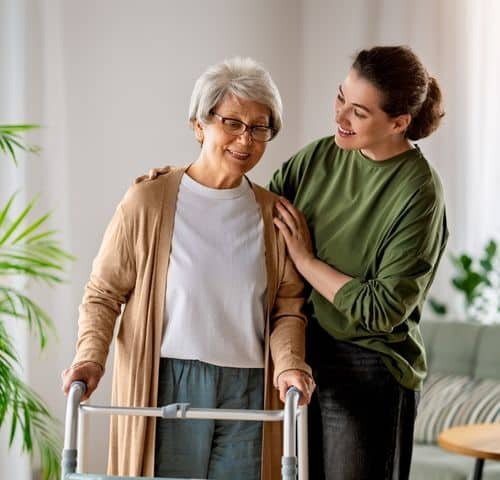
In-home memory care is non-medical support for someone living with Alzheimer’s disease or another form of dementia, delivered in their own home rather than in a facility. A trained caregiver comes on a schedule you set and helps with the routine, the meals, the personal care, the safety, and the long stretches of the day that have become difficult for everyone.

We are not a memory care community and we do not provide medical treatment. What we provide is a consistent, familiar person who understands what dementia does to a day and knows how to work with it rather than against it.

For many families, that is what makes staying home possible for another year, or two, or longer.

The daily work of memory care

Routine and Structure

The same caregiver, the same order of events, the same times. Predictability is the single most effective tool in dementia care, because a person who cannot rely on memory can still rely on rhythm.

Safety at Home

Supervision for wandering, watching for exit-seeking in the late afternoon, keeping walkways clear, monitoring the kitchen and the stove, and flagging hazards we spot around the house.

Personal Care With Dignity

Bathing, dressing, grooming, and toileting handled patiently and without rushing, which is usually the difference between a bath that happens and one that turns into a fight.

COVERAGE OPTIONS

Choose the schedule that fits where you are

A Few Hours at a Time

Common in the early stage. Meals, errands, driving, activity, and a familiar face on a regular schedule.

Daily or Extended Visits

For the middle stage, when the day needs structure and someone needs to be watching.

Overnight

For wandering, exit-seeking, and the frequent waking that wears families down fastest.

Around the Clock or Live-In

Continuous coverage when your loved one cannot safely be alone at any hour.

PAYING FOR CARE

What in-home memory care costs and how families pay for it

Cost depends on hours and on how much hands-on help is involved, and both usually rise over the course of the illness. We quote after the in-home assessment rather than over the phone. Families comparing us against a memory care community should count the whole picture, since limited schedules typically cost less than a facility while full around-the-clock coverage can cost more.

Private Pay

Families typically fund memory care from savings, a pension, Social Security, home equity, or by sharing the cost among adult children.

Long-Term Care Insurance

Most policies are built around exactly this kind of care. Benefits usually trigger when a person needs help with a set number of daily activities, which is where most families managing dementia already are.

Veterans Benefits

Some wartime veterans and surviving spouses qualify for VA Aid and Attendance, which can be applied toward in-home care including companionship. The application takes time, so start early.

State Programs

Florida funds some in-home respite and support for families managing Alzheimer's through elder services programs administered locally. Availability and waitlists vary. We can point you toward your Area Agency on Aging to check what you may qualify for.

HOW IT WORKS

Getting started takes one phone call

1. Call us

772-577-7257. Tell us what is happening at home, including the parts that are hard to say out loud. Fifteen minutes, no cost, no pressure.

2. We come to the home

We meet your loved one, learn the routine in detail, walk the house for safety, and build the plan around the hours that are hardest.

3. Care begins

We introduce the caregiver gradually rather than all at once, keep them consistent, and tell you what we are seeing as things change. If the match is not right, we change it.


Caregivers Trained in Dementia Care

Background checked, reference checked, and trained in the specific techniques memory care requires.

The Same Familiar Face

We keep the same caregiver with the same family, because in dementia care familiarity is not a nicety. It is the method.


BEFORE YOU CALL

Questions Families Ask

No. A memory care community is a residence, usually a secured unit inside an assisted living building. We provide one-on-one care in your loved one's own home. Some families use us to delay a move, and some use us instead of one entirely.

Yes. You do not need a diagnosis to bring in care. If the day has become difficult, that is enough. We would also encourage a conversation with her physician, since some causes of confusion are treatable.

There is usually a short adjustment, which is why we introduce the caregiver gradually and keep the same person consistently. Starting earlier helps, because the relationship forms more easily in the early stage.


Yes. Supervision, attention to exit-seeking in the late afternoon, and a structured routine are part of standard care for anyone at risk of wandering.

Hours and level of care adjust, from a few visits a week up to live-in or around-the-clock. You do not have to change providers as the illness progresses.

Yes. In the late stage many families combine our caregivers with a hospice team. Hospice provides the clinical side and we provide the daily hands-on presence.

You do not have to work this out on your own

Most families call us in the middle of a hard week. You do not need a plan before you pick up the phone. Tell us what the days look like now and we will help you figure out what would actually help.